Thinking, Fast and Slow – Daniel Kahneman
- January 9, 2026
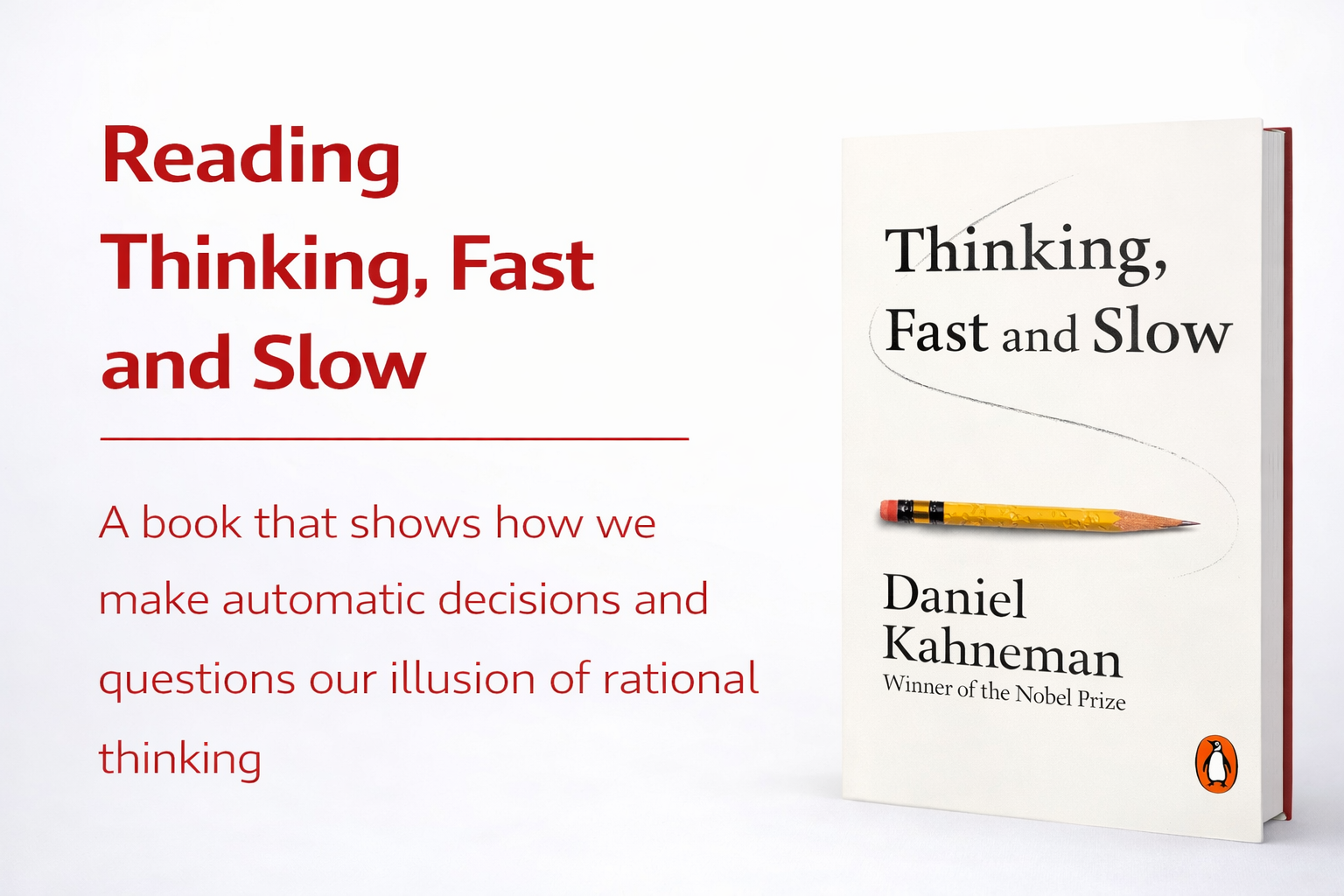
I finished reading Thinking, Fast and Slow and it was not one of those books that you close thinking “wow, this is amazing”. To be honest, the feeling was a bit strange. Not bad, but also not exciting. The interesting part is that after some time, the book keeps coming back to your mind, and this says more than it looks.
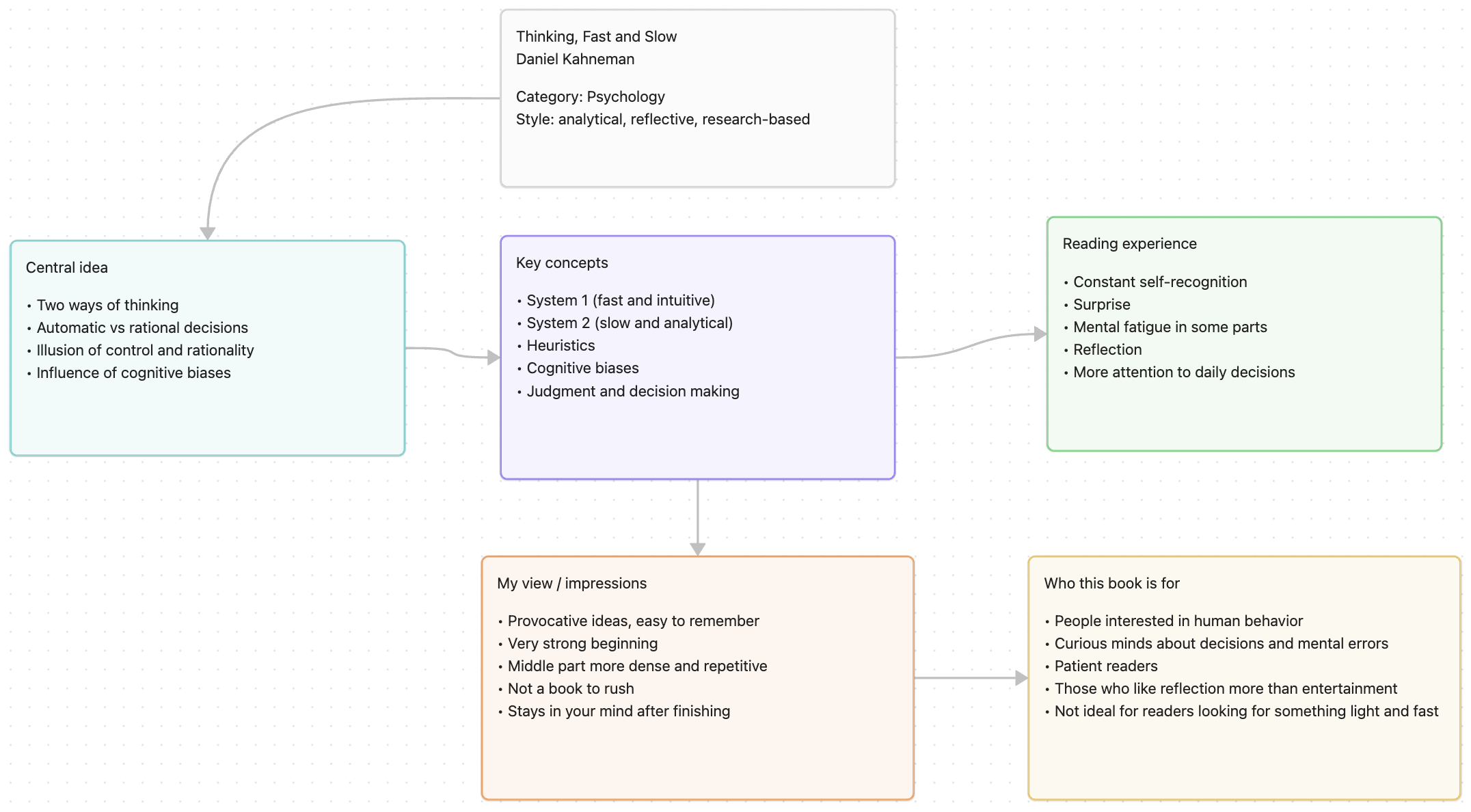
The main idea is simple. We like to believe that we make decisions in a logical and rational way, but in real life most of the time we are just reacting. The so called System 1 does almost all the work, fast, intuitive, full of shortcuts. System 2 exists, but it gives work, it is tiring, and we use it much less than we think.
This division is easy to understand and easy to remember. After reading the book, you start catching yourself thinking “ok, I was on automatic mode here” in many daily situations. Small choices, bigger decisions, judgments about people, everything goes through these mental shortcuts.
The book is full of experiments, examples and studies to prove these ideas. In many moments it works very well. In others, honestly, it gets a bit tiring. Not everything convinces, some parts feel too long and there are sections that really ask for patience. It is not a book to read fast.
For me, the beginning is clearly the strongest part. That is where everything fits better and makes more sense. Later the book becomes more technical and a bit repetitive in some points, and then it depends a lot on your mood as a reader. If you try to rush, it easily becomes just another boring book full of theory.
In the end, I don’t think this is a book for everyone. But it is a reading that makes you more aware of your own decisions, the shortcuts you use without noticing, and this comfortable illusion that we are always rational. Just that already makes the book worth reading, even with its flaws.