How to Win Friends and Influence People - Dale Carnegie
- December 30, 2025
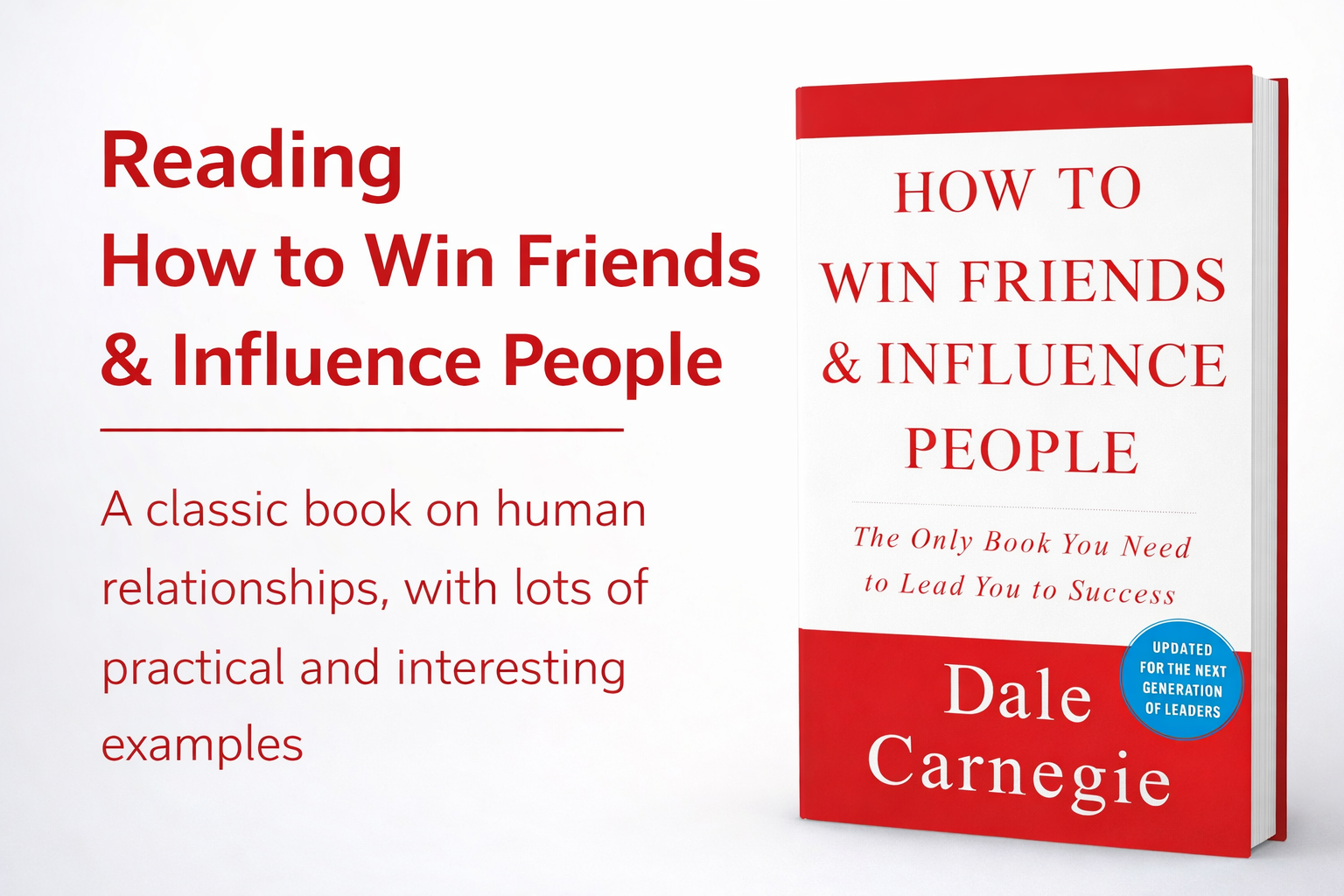
I’ve just finished How to Win Friends and Influence People and honestly I had that feeling of “ok, now I get why this book is a classic”. Overall, I think it’s a good book, easy to read, with lots of practical examples and real stories that help explain the ideas. You can clearly see it was written to be used in real life, especially at work and in professional relationships.

The book is divided into very clear parts. First, it talks about basic principles of human relationships. Then it moves into how to make people like you, how to influence others without creating conflict, and in the end, how to lead and change people’s behavior without resistance. The structure is simple, almost like a manual, with short and direct chapters, which makes the reading flow better.
One thing the book really insists on is listening more, criticizing less, and trying to understand the other person’s point of view before anything else. It sounds obvious, but in real life almost nobody does this. The idea of showing genuine interest in people, giving sincere praise, and avoiding direct confrontation makes a lot of sense, especially in corporate environments.
On the other hand, I felt the book goes a bit too far with the number of examples and different characters. At some points I got confused, trying to remember who was who and which story matched which principle. I think the same message could be delivered with fewer stories. Also, some situations feel very dated and strongly connected to American culture at that time, which makes it harder to relate today.
Another thing that bothered me a little was how superficial it can feel sometimes. The principles are good, but often it sounds like “do this and people will like you”. Real life is much more complex than that. Deep and real relationships don’t come from techniques, they come from respect, time and reciprocity. No method can guarantee that.
I see this book more as a guide for social and professional behavior, mainly at work, than a manual to create real friendships. It works well as a reminder of basic things people forget all the time, and I really mean basic stuff: be polite, listen more, don’t run over people, recognize when someone does a good job. It’s obvious, but in practice it makes a difference. It’s not a life-changing book, and it’s not revolutionary, but it’s an honest and useful read, especially for people starting to think more seriously about communication, leadership and human relationships.
In short, it’s a good book, with useful ideas, some excesses, but still worth reading.